
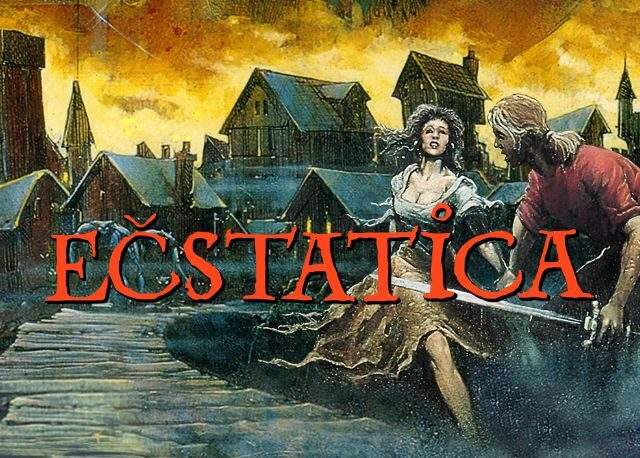
Before Survival Horror Was Even a Thing, a Werewolf Was Chasing You Through a Frog-Powered Fever Dream
Prepare yourself for a journey back to 1994 — a year before Resident Evil told the world what “survival horror” was supposed to be. A British developer named Andrew Spencer looked at the emerging genre of 3D adventure games and thought: you know what, let’s make everything out of ellipsoids. Everyone else was building their worlds from flat polygons. Spencer figured rounded geometric blobs made for more organic, more realistic-looking humans. The industry went with polygons. History, being a merciless editor, filed ellipsoids under “fascinating dead end.” But it gave us one of the strangest, most singular-looking games of the DOS era — and on October 26, it’s finally coming to Steam and GOG for the first time ever.
Boutique publisher SNEG, working directly with Andrew Spencer Studios, is bringing both Ecstatica (1994) and Ecstatica II (1997) to modern PCs just in time for Halloween. Demos for both are live on Steam right now as part of Steam Next Fest. Each game is $14.99 USD (about $21 CAD), or you can grab the pair in a bundle for $19.99 (roughly $28 CAD). Honestly? That’s criminally cheap for two pieces of gaming history.
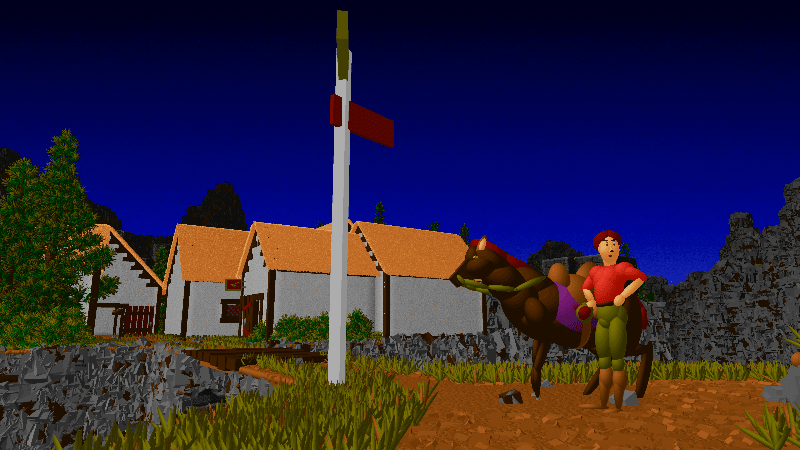
The first Ecstatica, originally published by Psygnosis, is a pioneering survival-horror adventure that still plays by rules nobody else bothered with. There’s no UI, no quest log, no prompts. The game unfolds entirely through cinematic fixed camera angles — 1,100 hand-chosen ones in the sequel — and hands you a premise that sounds like a Monty Python fever dream: you stop in the demon-cursed medieval village of Tirich for a drink of water, and find yourself stalked by an unkillable werewolf.
Gameplay is puzzles over combat, and it’s the sort of game where the press release warns you to “expect to die a lot… or get turned into a frog.” Encounters and enemy spawn points shift between runs, so no two attempts play the same. The whole thing is steeped in that very specific 90s British edginess and absurd humour — the kind of game that could only have come from one eccentric programmer’s brain.
Ecstatica II (1997) goes bigger and bloodier: a dark fantasy action-adventure where the hero returns home to find his realm ravaged by an evil archmage, and sets out to defeat him and rescue the sorceress Ecstatica. The tone is grittier, the combat leans hack-and-slash with potions and spells in the mix, but Spencer’s unmistakable rounded-visual style is all over it.
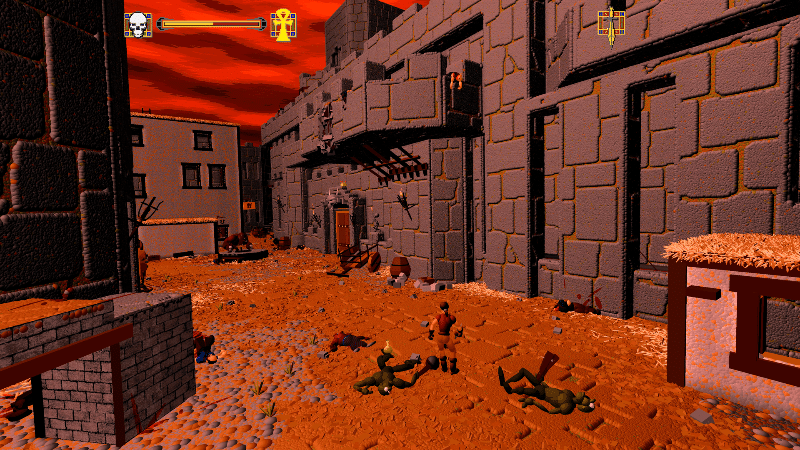
These aren’t remakes — and honestly, I’m glad. SNEG is taking the existing games, making them run properly on current hardware, and leaving the unusual visual design exactly where it belongs: intact. That means full controller support, Steam Achievements, Cloud Saves, Steam Deck compatibility, and my favourite party trick: switchable graphics modes — Classic DOS, Classic Windows, and a new Software mode that supports widescreen and 4K. You can flip between them on the fly, comparing the old versions with the new renderer in real time.
SNEG director Artem Shchuiko puts it better than I could: the games are “unlike anything that have come out before or since,” and for years they’ve been “relegated to old operating systems that made them difficult for the average player to access.” This is the first time either game has been available digitally. If you’ve ever needed an old DOS setup, original discs, and a folder full of compatibility tweaks just to see what all the fuss was about, your problems end October 26.
No generative-AI involvement is reported in any of the coverage of this restoration — it’s a classic preservation-and-rescue job, the original studio included.
Are you brave enough to grab a drink in Tirich? The demos are free, so you’ve got no excuse.
Sources: SNEG press release via Games Press (Oct 19, 2026); GameRant (Oct 21, 2026); The Otaku Authority (Oct 20, 2026); Generation Amiga (Sept 14, 2026).