
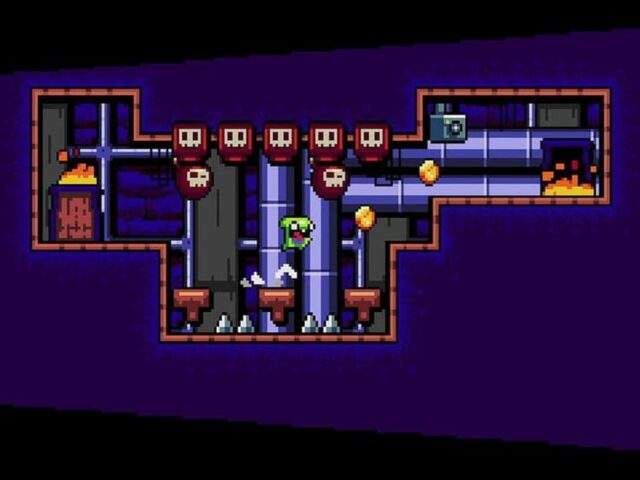
The SNES has always been the console that homebrew devs circle cautiously, like a cat around a bathtub. Making games for it has stayed stubbornly hard: even seasoned C programmers regularly bounce off its hardware quirks and retreat to the friendlier waters of the Sega Genesis. So when a tiny indie studio announces its no-code tool can now spit out working SNES ROMs running at a locked 60 frames per second, my ears perk up.
That studio is Two Black Cats, the indie team behind MD Engine — a drag-and-drop, visual game creator that lets anyone build authentic Sega Genesis and Mega Drive games without writing a line of C or Motorola 68000 assembly. The tool launched commercially on Steam on September 7, and sells there for $20 USD (about $28 CAD). Now, according to Pants Pants Revolution, the studio has ported both the engine and its proof-of-concept game, Prisonela MD, to the Super Nintendo — running on real hardware at a full 60 FPS. The dev tagged the milestone under both #mdengine and #s16engine, which tells you they’re thinking cross-platform, not just one-off experiment.
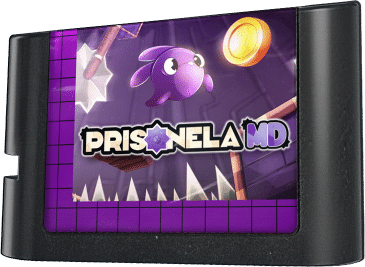
Prisonela MD is the perfect stress test, by the way. It’s an adaptation of Denis Rogov and Ratalaika Games’ minimalist twitch platformer — over 80 tiny trap-filled rooms where dying shuffles the level order, so the whole thing lives or dies on tight, instant movement. It first released for the Mega Drive on May 30, 2025, with physical cartridges distributed by The Retro Room Games. If a frame-perfect game like that holds 60 FPS on the other side of the console war, the engine is doing serious heavy lifting.
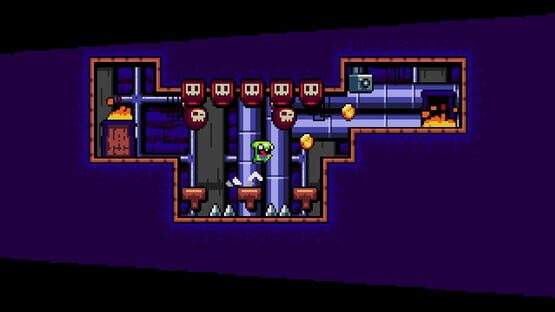
Because here’s the thing that makes this genuinely impressive: the Genesis and SNES are very different beasts under the hood. Sega’s machine ran a 7.6 MHz Motorola 68000, famously unbothered by fast action titles. Nintendo’s console leaned on the Ricoh 5A22 — a 65c816-based chip clocked at just 3.58 MHz — with a deeper color palette and tricks like Mode 7 instead of raw speed. Back in the day, brute-forcing Genesis logic onto Nintendo’s slower CPU produced ports full of slowdown. For a drag-and-drop engine to bridge that gap with zero hand-tuned assembly from the user, the compiler and runtime have to be doing the work of a small team of wizards.
The honest open question — and the one I’ll be watching — is audio. Converting FM synthesis tracks from the Genesis’s YM2612 chip into samples that fit inside the tiny 64KB RAM of Sony’s SPC700 sound chip is where cross-platform homebrew efforts usually hit the wall. Two Black Cats hasn’t shown that part yet, and there are no details on release window or pricing for the SNES update — it’s unclear whether it’ll arrive as an expansion to the existing Steam release or as a standalone S16 Engine package.
Still, this is the lineage that matters: GB Studio cracked the Game Boy wide open, NESMaker did the same for 8-bit Nintendo boards, and the SNES has been the stubborn holdout. If a solo artist can soon build one game in a visual editor and export working ROMs for both sides of the 1991 console war, the SNES homebrew library is about to get a lot louder. I’m here for it.
Sources: Pants Pants Revolution (Oct 16, 2026), MD Engine press kit, Hartware.de (Sept 3, 2026). No generative-AI involvement was reported by any source.