
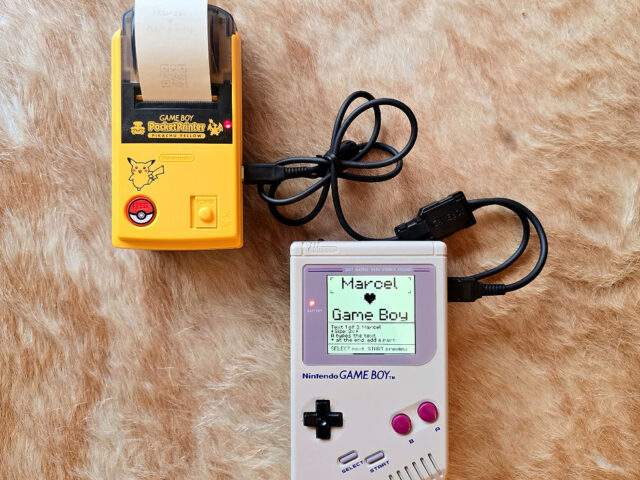
In 1998, Nintendo sold a thermal sticker printer for the Game Boy. You could print Game Boy Camera photos, a page of your Pokédex, a handful of template stickers — and that was it. What you could never do was just type what you wanted and print it. A printer that only prints what somebody else decided is half a printer. Thirty-seven years after the Game Boy, one hobbyist has finally built the other half.
It’s called LABEL BOY, a homebrew cartridge from the Game Boy Museum that turns the Game Boy Printer into a genuine label maker: text in four sizes, QR codes, EAN and Code 128 barcodes — all computed by the Game Boy itself. The ROM is free and it’s in early alpha, and it even runs in a browser (with one honest limitation: a browser has no printer on its link port, so printing correctly reports that no printer answers).
The QR code math is the showpiece. The Game Boy builds every code itself — splits the text into blocks, adds the error correction that lets a phone read a creased code, and draws every module — handling the first ten QR sizes at all four correction levels. There’s an assistant for web addresses, Wi-Fi, contacts, and phone numbers, and it prints the network and password in plain text underneath, for the one guest whose phone has no camera.
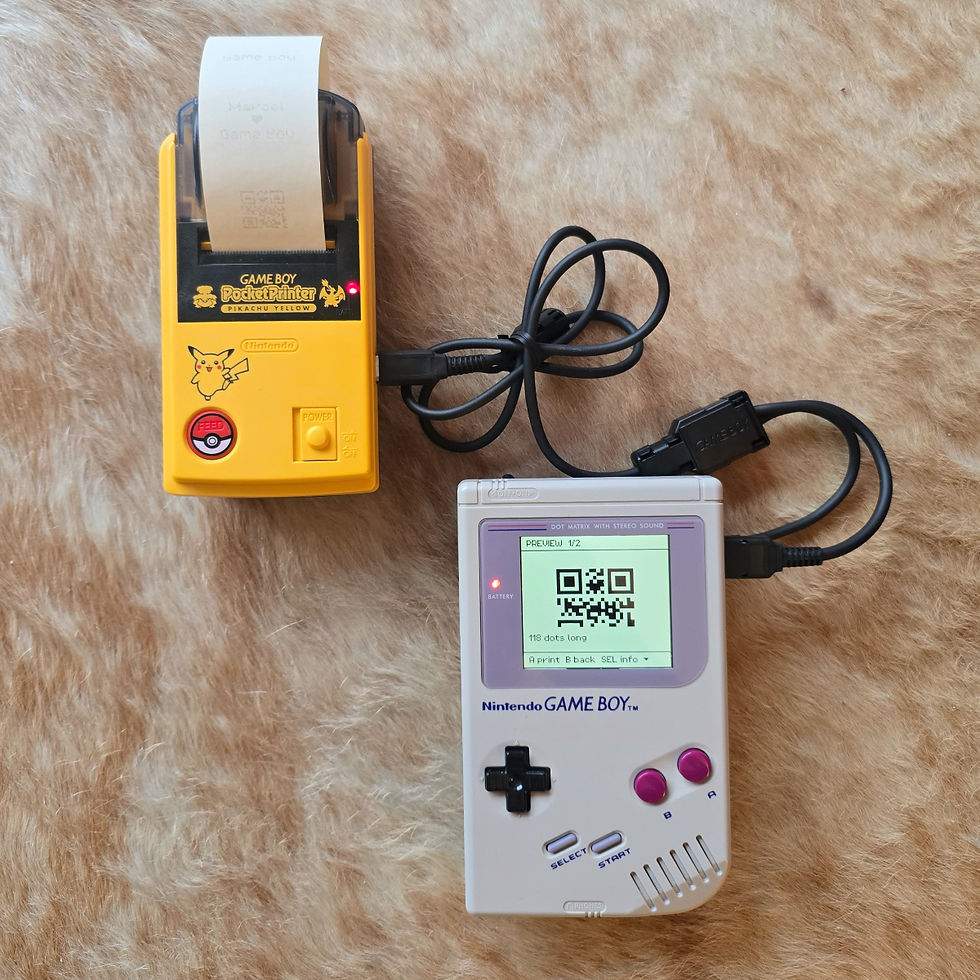
The barcodes posed a different puzzle, and the solution is brilliant: a typical EAN-13 is 113 modules wide, but the print head only has 160 dots. At one dot per module, most scanners give up — so when a code doesn’t fit across, LABEL BOY rotates it 90 degrees, and the code grows along the roll where there’s no limit. It even cautions that EAN numbers are GS1-issued, so for numbers of your own it suggests Code 128 instead.
My favourite is the dream feature: an untested Barcode Boy card. In 1992, six years before the printer, Namco sold a barcode reader for the Game Boy in Japan. This card is built purely from the published Barcode Boy specs, so whether the printer’s dots are fine enough for Namco’s 1992 reader is a question only real hardware can answer. If it works, a printer from 1998 will feed a reader from 1992. If you own a Barcode Boy, the dev is asking you to try it.
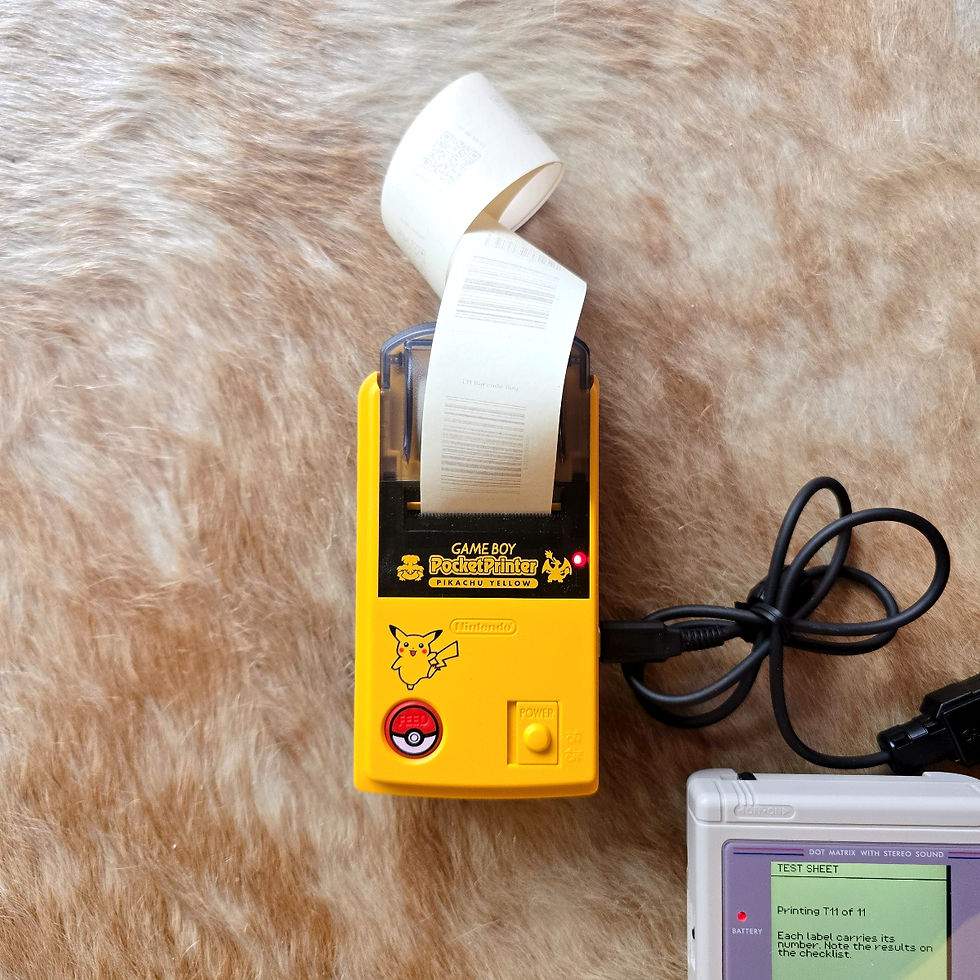
The rest reads like a love letter to the poor printer: templates, serial printing from a 64-line list, a counter that turns one label into twenty numbered boxes, undo and redo, 14 labels saved in battery RAM, a full printer test suite, and nine short articles about the printer riding along on the cartridge. Nothing in the source discloses whether any generative AI was used — but this is hand-built homebrew in every way that shows. The font was drawn pixel by pixel, and a planned recycling symbol got dropped because three arrows in a circle are, in the dev’s words, “just a smudge at seven dots tall.”
Is any of this practical in 2026? Of course not — the dev says so himself. But it’s about finishing something Nintendo started in 1998 and never closed the loop on. Still got your Game Boy Printer in a drawer? This might be the excuse to dig it out.
Sources: Game Boy Museum (LABEL BOY announcement, published Oct 5, updated Oct 17, 2026); Daily Inference (Oct 18, 2026, on the museum project and its LABEL BOY offshoot).