
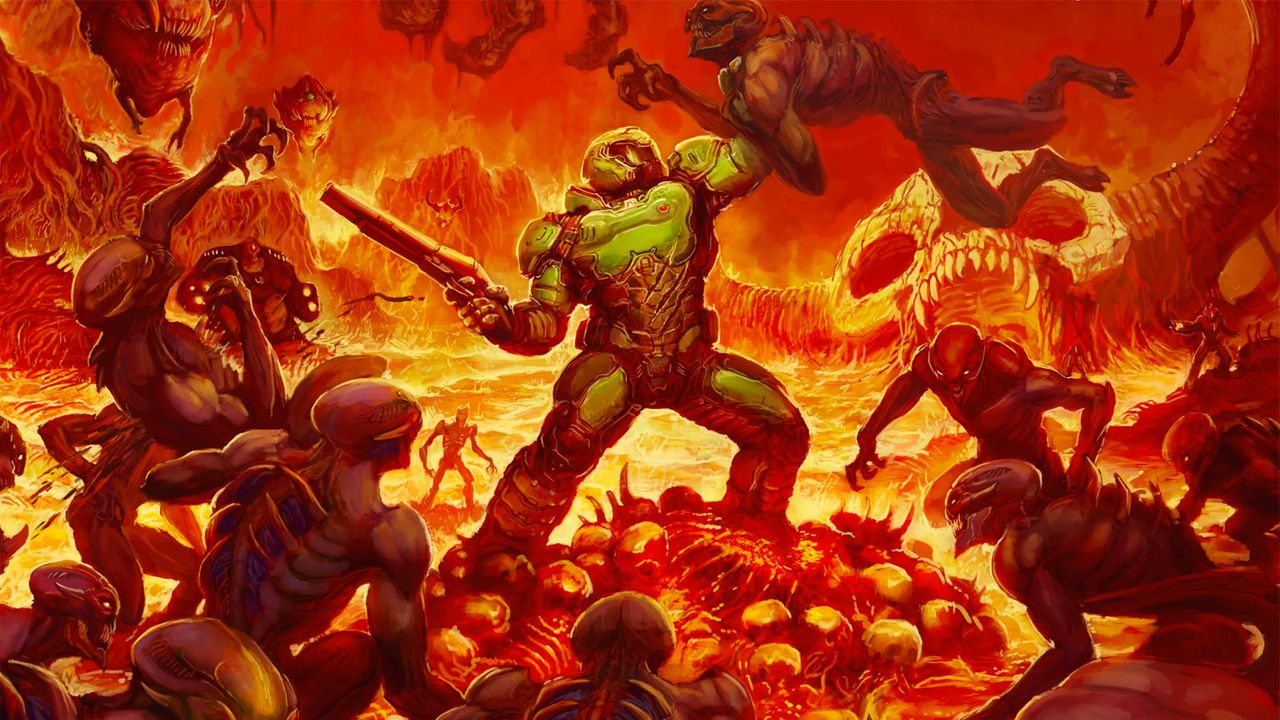
After following id Software’s DOOM revival for more than two years, I finally got the chance to chew through the lengthy campaign for this reimagining of the 1990s FPS classic. While the game’s multiplayer component was mostly met with jeers, the single player surprised critics and fans alike. Now that the game is available at hefty discounts, should you reenlist with the United Aerospace Corporation or sit this one out?
Unlike the over-a-decade-old Doom III, this new DOOM is well aware of why fans are going to be playing this game’s single player: to brutally murder hordes of demons in several different spectacular splat-fests, collect an ever-expanding array of over-the-top weapons, explore sprawling levels and, at the end of the adventure, do battle with a larger-than-life Cyberdemon that commands the forces of Hell. The developers didn’t try to fit the existing DOOM franchise into a new mold — in contrast to Doom III’s survival-horror-inspired design decisions, this new DOOM embraces its gory roots and plays it up with an almost comedic effect. That confidence in what DOOM is supposed to be, rather than a reinvention of it, is what sets the tone for everything that follows.
Once again, we don the iconic green armor of one of the FPS mainstays… no, not Master Chief… but the grandfather of all other Space Marines, DoomGuy. Throughout the 9–12 hour campaign (it took me about 10 hours to beat single-player on the medium difficulty), DoomGuy will explore several different compartments of the UAC facility on Mars, where a portal to hell has caused hundreds of the damned to flood the halls of this technological wonder. Unlike other titles in the DOOM series, this particular game doesn’t begin with a version of the UAC Mars Facility prior to the demonic invasion — instead, DoomGuy will pick up a pistol within the first 15 seconds of beginning the single player and immediately start slaying demons to pumping rock music. There is no slow build-up, no tour of the facility before everything goes wrong; the invasion has already happened, the halls are already flooded, and the game trusts you to learn the place the same way DoomGuy does — by fighting through it.
And that fighting is where the game earns its keep.
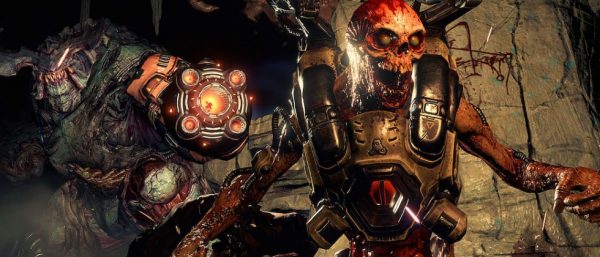
Destroying demons has never felt as satisfying as it has in 2016’s DOOM. This has a lot to do with just how id Software has improved upon the combat systems of old to make them fresh, while keeping the over-the-top violence that makes this reimagining distinctively DOOM. Typically the DoomGuy will take on encounters of 5–10 demons, with several more waves spawning once the previous group has been destroyed. Unlike other games in the franchise, enemies will flash bright orange or blue when you have hurt them enough, quickly enough. Rushing forward and clicking the right stick during this flashing animation will have the DoomGuy perform a “glory kill” — which can range from ripping off an enemy’s arms and beating it with them, to ripping out a demon’s entrails and feeding them back to it. Yes, they are gruesome, and they do get repetitive, but the glory kills can provide absolutely necessary extra health to DoomGuy during the middle of an encounter. That health is what turns the gore into a system rather than just a spectacle: pushing forward into danger, instead of hanging back, is how you stay alive, so the combat keeps rewarding aggression right through each wave.
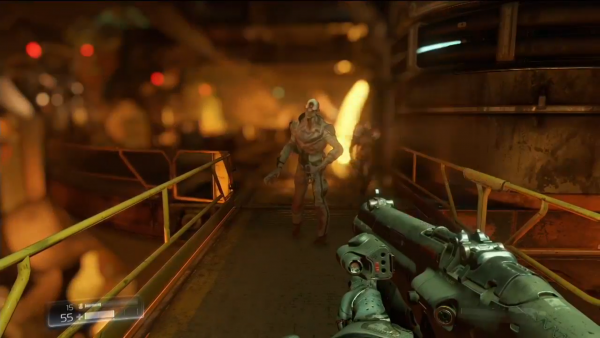
The other thing that makes the combat in this game so satisfying is the weaponry. A lot of the DOOM classics return — the pistol, the shotgun, the super shotgun, the pulse rifle and the BFG 9000, to name just a few — but id Software has once again outdone itself by adding a bevy of secondary modes and modifications for each weapon. While playing, challenges will be completed passively throughout the campaign, awarding “weapon upgrade” points that can be spent on your arsenal. A standard set of enhancements will be available right from the get-go, such as enhanced magazines and quicker reload speeds, but what really makes the weapon upgrade system so robust is the inclusion of modifications. By locating weapon drones in each level, DoomGuy can unlock a set of modifications for each weapon. These modifications range from an explosive shot for the shotgun to a scope for the heavy machine gun — giving you options that allow you to deal with both up-close groups and far-away targets. One of the best parts of the weapon modification system is that once you’ve unlocked several of them for a single weapon, you can easily swap between them with the press of the D-Pad. That easy swapping is what makes the growing arsenal feel practical rather than just large: the same weapon can answer a close-quarters group one moment and a far-away target the next, without breaking the pace of an encounter.
With combat that relentless, it would be easy to assume the world around it is an afterthought. It isn’t.
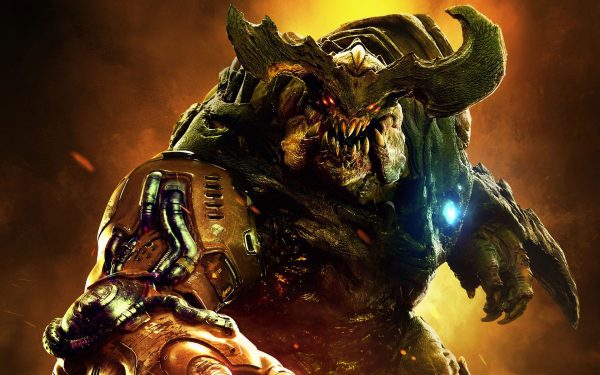
With its focus on quick-paced combat and first-person platforming, it might not sound like DOOM is a game that you’d want to play for the story, but id Software has actually spent considerable time crafting the world of DOOM. Upon completing levels, players will unlock dossiers on iconic enemies like the Pinky Demon, Cyberdemon, Hell Knight, Imps, and others — these dossiers not only flesh out the traits and mechanics of these enemies, but also do quite a lot to inform players about the societal structure of Hell. Particular attention should be paid to the in-game narrative cutscenes and hidden PDAs contained in the levels, because of the sci-fi narrative about a mysterious corporation helmed by the first sentient artificial intelligence. For what could have been a throwaway narrative designed simply to introduce reasons for the DoomGuy to slaughter the minions of Hell, I found the narrative quite engaging. The key is that this world is optional: the dossiers, cutscenes, and hidden PDAs are there to be found and read between the splat-fests, so the story deepens the campaign for players who want it without ever slowing down the players who just want to keep moving.
All of that adds up to a campaign that stands apart from its competition in more than just its gore.
DOOM’s single-player puts the 4-hour campaigns we’ve seen in other FPS titles to shame — whether that was id Software’s intention is debatable. What is clear is that they have taken the time to craft a very detailed science fiction universe for a franchise that is known more for splattering demons’ brains against the wall than it is for its storytelling. By marrying an optional rich world, gunplay that provides dozens of tools and upgrades to explore, the series’ trademark gore, and large levels with dozens of secrets, id Software has managed to create a campaign that is nearly double the length of its competition and demands to be replayed. Finding all of the secrets can be daunting, and failing demon encounters on higher difficulties a few times can be frustrating, but none of that detracts from just how slick a package DOOM’s single player is. So, to answer the question this review opened with: reenlist. The demons, the weapons, and the world behind them make this a campaign worth returning to, long after the multiplayer jeers have faded.